
An Emmaus Center for Biblical Teaching Pilgrimage
The Martyrs of Japan
In the Footsteps of the Hidden Christians
Hirado · Nagasaki · Gotō Islands · Shimabara · Amakusa
May 19–28, 2027 · 10 Days / 9 Nights · Limited to 30 Participants
Journey through the lands where Japanese Christians suffered, persevered, and preserved their faith through centuries of persecution. Led spiritually by Dr. Randy Furushima, this pilgrimage brings Scripture, history, prayer, and sacred place into conversation with one another.
The Martyrs of Japan
Why This Pilgrimage Matters
Christianity took root in Japan through missionary witness, local conversion, and communities willing to endure severe persecution. After Christianity was outlawed, many believers practiced their faith in secret for generations, preserving fragments of prayer, ritual, memory, and Christian identity.
This pilgrimage enters that history not merely to observe it, but to ask what Christian faithfulness means when belief becomes costly.
Witness and Martyrdom
Encounter the places where Christians gave their lives rather than renounce their faith, and consider the meaning of martyrdom as Christian witness.
Hidden Faith
Learn how communities maintained a Christian identity for more than two centuries without public churches, clergy, or ordinary sacramental life.
Discipleship in Place
Read Scripture and pray where these events occurred, allowing geography, memory, and Christian testimony to deepen reflection.
“The story of Christianity in Japan is not only a story of martyrdom, but also of faith preserved in hiddenness and hope.”
The Emmaus Pilgrimage Experience
An Emmaus Center pilgrimage is not simply a guided visit to Christian historical sites. It is a journey of study, prayer, reflection, and fellowship shaped by the biblical story.
At selected locations, Dr. Randy Furushima will lead teaching devotions that connect Scripture with the history and spiritual meaning of the place. These moments will provide space to listen, pray, reflect, and consider how the witness of Japan’s Christians speaks to discipleship today.
Scripture
Biblical readings will frame the themes of witness, suffering, perseverance, hope, and Christian community.
Historical Interpretation
Participants will learn the historical context of Catholic missions, persecution, martyrdom, suppression, and hidden Christian communities.
Prayer in Place
Selected churches, memorials, villages, and landscapes will become settings for guided devotion and personal reflection.
Pilgrim Fellowship
Shared meals, travel, conversation, and prayer will form an important part of the common journey.
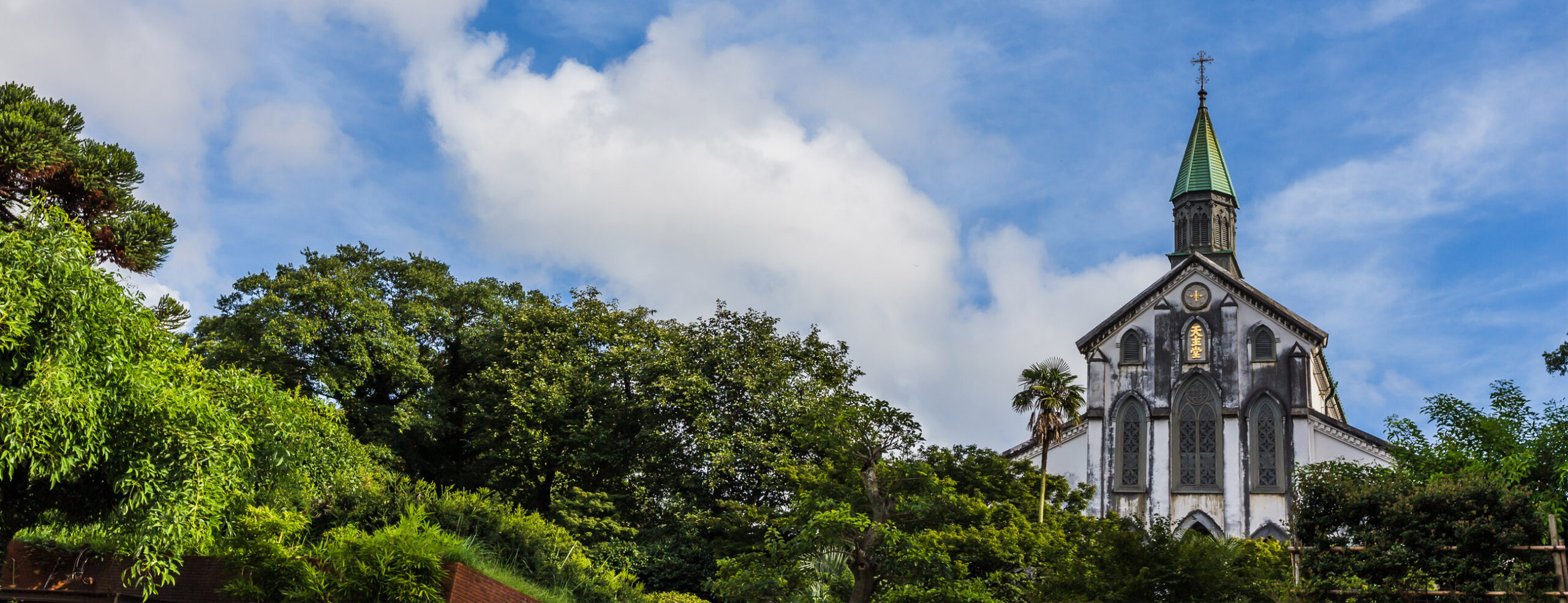
Ōura Cathedral, Nagasaki
Near this site in 1865, a group of Hidden Christians revealed their faith to Father Bernard Petitjean after generations of secrecy. Their emergence became one of the most remarkable episodes in modern Christian history.
Sacred Landscapes of the Journey
Hirado
The First Christian Encounters
Explore communities where Christianity took root during Japan’s early encounters with European missionaries and where later generations preserved memories of forbidden faith.
Gotō Islands
Faith at the Margins
Visit remote island communities shaped by migration, isolation, persecution, and the quiet endurance of Christian belief.
Nagasaki
Martyrdom, Discovery, and Renewal
Encounter the city associated with the Twenty-Six Martyrs, the rediscovery of the Hidden Christians, and the complex Christian history of modern Nagasaki.
Shimabara and Amakusa
Rebellion and Remembrance
Reflect upon the religious, social, and political tensions surrounding the Shimabara-Amakusa uprising and the memory preserved at Hara Castle and Sakitsu.
Sotome
Faith Preserved in Secret
Enter a landscape associated with Hidden Christian communities and the later recovery of their story.
The full day-by-day itinerary, accommodations, and travel information are available through Hanetabi Tours.
From History to Pilgrimage
The history of Christianity in Japan can be studied through books, documents, and lectures. Pilgrimage adds another dimension: the physical encounter with the places where faith was confessed, concealed, tested, and remembered.
The aim is not to romanticize suffering, but to receive the testimony of those who lived before us and to reflect upon our own response to Christ.
Remember
Learn the history of the missionaries, martyrs, Hidden Christians, and communities that carried the Christian story through persecution.
Encounter
Stand within the churches, villages, islands, ruins, and memorial landscapes where that history unfolded.
Respond
Consider what their witness asks of contemporary Christians regarding courage, fidelity, forgiveness, hope, and discipleship.
Pilgrimage Details and Registration
Hanetabi Tours is the official tour operator for this pilgrimage and manages the detailed itinerary, accommodations, transportation, pricing, payment, registration, and travel policies.
Emmaus Center for Biblical Teaching provides the pilgrimage’s spiritual leadership, teaching, Scripture reflection, and devotional formation.
Dates
May 19–28, 2027
Length
10 days / 9 nights
Group size
Limited to 30 participants
Begins and ends
Nagasaki
Spiritual leader
Dr. Randy Furushima
Tour operator
Hanetabi Tours
The pilgrimage begins and ends in Nagasaki. Participants are responsible for arranging travel to and from Nagasaki Airport. Please consult Hanetabi Tours for the current itinerary, inclusions, and travel terms.
Itinerary and Registration
Review the complete day-by-day itinerary, pilgrimage cost, accommodations, inclusions, payment schedule, and registration requirements on the Hanetabi Tours website.
You will be taken to the Hanetabi Tours website to review travel details and submit your registration.